Skip to content
GEO / AEO / AI Search

Hire a Generative Engine Optimization Expert

I help brands get cited and recommended inside ChatGPT, Perplexity, Gemini, and Google AI Overviews. My approach is built on technical SEO foundations and extended with entity optimization, external visibility, and content structured for AI retrieval.

ChatGPTPerplexityGeminiClaudeCopilotAI Overviews

Client results

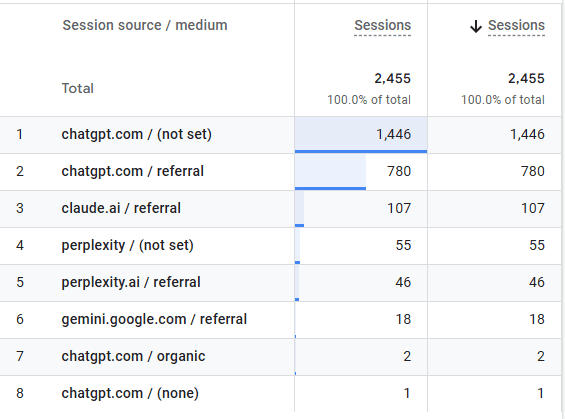
2,455
AI-source sessions in 30 days
Finance industry client
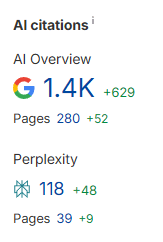
+629
AI Overview appearances
Translation industry client

GA4: AI traffic sources, finance client (last 30 days)

Google Analytics 4 report showing 2,455 sessions from AI sources including ChatGPT, Claude, Perplexity, and Gemini in 30 days

Generative Engine Optimization, explained simply

GEO is advanced SEO adapted for AI-driven search environments. The same fundamentals apply: topical authority, crawlability, entity consistency, internal linking, backlinks, technical SEO. But GEO extends beyond Google rankings into how AI systems retrieve, synthesize, and recommend information.

AI engines like ChatGPT, Perplexity, Gemini, Claude, Copilot, and Google AI Overviews evaluate not just your website. They also evaluate:

  • Brand mentions across the web
  • Citations from trusted sources
  • Authority and consensus signals
  • Entity relationships and associations
  • Discussions in forums and communities
  • External trust signals
  • Reddit and Quora visibility
  • Inclusion in listicles and comparisons
Adrian Czarnoleski, GEO and SEO Consultant
SignalTraditional SEOGEO
TargetGoogle rankingsAI-generated recommendations
Core optimizationKeyword targetingEntity optimization
Off-site signalsBacklinksBrand mentions + citations
MetricsOrganic CTR, rankingsAI visibility, citation frequency
Content goalSERP optimizationLLM retrieval optimization
External platformsLink acquisitionReddit, forums, listicles, trusted directories
Authority signalsDomain authority, PageRankE-E-A-T, entity associations, brand sentiment

How I approach GEO

I do not run generic content campaigns. Each engagement starts with understanding how AI systems currently perceive the brand, then building systematically from the ground up.

Step 01

Entity & Brand Understanding

  • Audit how AI systems currently perceive the brand
  • Identify missing or incorrect entity associations
  • Map weak topical connections and knowledge gaps
  • Benchmark AI citation frequency across platforms
Step 02

Topical Authority Expansion

  • Build structured topic clusters around core subjects
  • Improve semantic coverage across related subtopics
  • Strengthen internal linking architecture
  • Expand supporting content for AI retrieval
Step 03

External Visibility Optimization

  • Target Reddit, Quora, and industry forums
  • Build presence in listicles and comparison pages
  • Acquire citations from trusted directories
  • Grow expert mentions and off-site brand associations
Step 04

AI Retrieval Optimization

  • Structure content for concise AI-friendly answers
  • Implement FAQ optimization and schema markup
  • Ensure factual consistency and entity clarity
  • Format content to be quote-worthy and citable
Step 05

Authority & Trust Building

  • Digital PR and high-authority mention acquisition
  • E-E-A-T improvement across the site
  • Expert positioning and branded search growth
  • Strategic link acquisition in relevant verticals
Step 06

Continuous Monitoring

  • Track AI citation frequency per platform
  • Monitor prompt evolution and visibility changes
  • Iterate based on what AI systems recommend
  • Adapt strategy as LLMs update their models

What does a GEO consultant actually do?

A GEO consultant closes the gap between where your brand currently appears in AI-generated answers and where it should appear. Here is what that looks like in practice.

Audit current AI visibility across ChatGPT, Perplexity, and Gemini
Map entity associations and identify gaps competitors exploit
Improve content retrieval likelihood through structure and formatting
Build brand mentions and citations across trusted external sources
Strengthen topical authority through content cluster development
Optimize for AI Overviews in Google search results
Develop Reddit and forum visibility strategies
Grow external trust signals through digital PR
Help brands appear in AI-generated recommendation lists
Monitor and iterate as AI search behavior evolves

Practical deliverables

GEO audit
AI visibility analysis
Entity mapping
Topical authority plan
AI-focused content strategy
Reddit/forum strategy
Digital PR recommendations
Technical SEO improvements
Structured data implementation
Content rewrites for AI retrieval

How brands appear in ChatGPT, Gemini, and Perplexity

LLMs do not work like Google Search. They synthesize information from multiple trusted sources and generate responses based on consensus, authority, and entity relationships. Getting a brand into those responses requires a different strategy than traditional ranking work.

ChatGPT

Sources from training data and Bing's index (in browsing mode). Brands appear when they have consistent entity signals, strong off-site citations, and content that aligns with common query patterns. Community discussions, especially Reddit, carry significant weight.

Perplexity

Real-time web retrieval engine. Prioritizes freshness, source authority, and citation density. Pages with clear structure, factual consistency, and high-authority backlinks are cited more frequently. Direct indexation of Reddit threads, forums, and news sources.

Gemini

Built on Google's index, so traditional SEO signals are directly relevant. E-E-A-T matters. Structured data, entity clarity, and topical authority feed directly into how Gemini retrieves and presents information about a brand.

Google AI Overviews

Appears above organic results for many informational and commercial queries. Sites that are cited inside AI Overviews tend to have strong topical authority, well-structured content, and clear entity associations in Google's Knowledge Graph. Inclusion drives high-intent traffic.

Real results from real clients

These case studies reflect actual work across different industries. Each started with a different baseline and a different set of challenges.

Ahrefs screenshot showing +629 AI Overview appearances for a translation industry client
Ahrefs: +629 AI Overview results for a translation industry client over 6 months of GEO work
  • Day Translations: +629 AI Overviews After Google Penalty Recovery

    Read Case Study
    Day Translations SEO case study
  • OddsJam: Total Dominance in AI Results with 90% Citation Rate Among Competitors

    Read Case Study
    OddsJam SEO case study

Who this service is for

GEO works for any brand that wants to be recommended inside AI-generated answers. The stronger the existing topical authority, the faster the results compound.

SaaS companies
AI startups
Enterprise brands
Affiliate websites
Publishers
E-commerce brands
Finance companies
Professional services
Local businesses targeting AI visibility
Companies losing clicks to AI Overviews
Brands not appearing in ChatGPT recommendations
Sites with strong SEO ready to expand into GEO

What most brands get wrong

I see the same patterns repeatedly. These mistakes keep brands invisible in AI search regardless of how much content they produce.

AI-generated content only

Flooding a site with AI-written content does not build authority. AI systems cite brands that are trusted externally, not just internally prolific.

Ignoring external mentions

GEO is heavily influenced by off-site signals. Brands with no Reddit presence, no forum visibility, and no citations in trusted sources rarely appear in AI recommendations.

Weak topical authority

Covering too many topics superficially. AI systems favor brands that own a topic deeply, not generalists with thin content across everything.

Inconsistent entity signals

Brand name, description, and associated topics vary across pages and platforms. AI systems get confused and underweight the brand in relevant queries.

Relying only on backlinks

Traditional link acquisition is necessary but not sufficient for GEO. Brand mentions, citation context, and community presence matter as much as links.

Poor content structure

Content written for humans to scroll through, not for AI to extract. No clear definitions, no FAQ sections, no structured answers. Hard for LLMs to retrieve.

Weak E-E-A-T signals

No author profiles, no expert credentials visible on the site, no external validation. AI systems weight experience, expertise, authority, and trustworthiness heavily.

No monitoring

Setting up GEO optimizations and forgetting about them. AI systems evolve, prompts change, and visibility shifts. Continuous monitoring is required.

Frequently asked questions

What is generative engine optimization?
GEO (Generative Engine Optimization) is the practice of improving how your brand and content are retrieved and cited by AI-powered search engines like ChatGPT, Perplexity, Gemini, and Google AI Overviews. It builds on traditional SEO fundamentals and extends into entity optimization, external visibility, and content structured for AI retrieval.
What is the difference between SEO and GEO?
Traditional SEO targets Google rankings through keywords, backlinks, and technical optimization. GEO targets AI-generated recommendations through entity clarity, brand mentions, citations, forum visibility, and content structure that AI systems can retrieve and synthesize. The two overlap significantly. Strong SEO fundamentals are the foundation of GEO.
How do brands appear in ChatGPT?
ChatGPT sources information from its training data, Bing's index (in browsing mode), and trusted third-party sources. Brands appear when they have consistent entity signals, strong off-site mentions, citations in trusted publications, and content that aligns with how users phrase queries to AI assistants.
Does GEO replace traditional SEO?
No. GEO expands on traditional SEO rather than replacing it. Topical authority, crawlability, internal linking, backlinks, and technical SEO still form the core. GEO adds a layer focused on AI retrieval, external visibility, and entity associations.
How long does GEO take?
Initial AI visibility improvements can appear within 2 to 4 months depending on the site's authority baseline. Consistent citation growth and LLM recommendation frequency build over 6 to 12 months of continuous work. GEO requires ongoing monitoring since AI systems update their responses as the web changes.
Can you optimize visibility for Perplexity and Gemini?
Yes. Each platform has slightly different retrieval patterns. Perplexity indexes the live web in real time, so high-authority external mentions and freshness matter. Gemini pulls from Google's index, making traditional SEO signals more directly relevant. I audit and optimize for all major AI platforms.
What industries benefit most from GEO?
Any industry where people ask AI assistants for recommendations, comparisons, or information benefits from GEO. This includes finance, translation, SaaS, e-commerce, professional services, travel, health, and media. The stronger your topical authority, the faster GEO delivers results.
Is GEO only for AI companies?
No. GEO is for any brand that wants visibility in AI-generated answers, regardless of industry. I have worked with clients in finance, translation, and sports analytics, all achieving AI visibility through GEO strategies.
How do AI Overviews impact SEO?
AI Overviews in Google appear above traditional results for many queries, which reduces clicks to ranked pages. Sites cited inside AI Overviews often see a different type of engagement: fewer casual clicks, more high-intent visitors. Optimizing for AI Overview inclusion is a core part of modern SEO.
Does Reddit visibility help AI search visibility?
Yes, significantly. Reddit is heavily indexed by Google and cited frequently by Perplexity and other AI systems. Brands with strong Reddit presence, genuine community mentions, and positive forum discussions consistently appear more often in AI-generated recommendations.
What are entity signals?
Entity signals are the structured and unstructured data points that help AI systems understand who your brand is, what it does, and how it relates to other entities. This includes your Wikipedia/Wikidata presence, consistent NAP data, schema markup, brand mentions across trusted sites, and how your brand is discussed in context.
How do LLMs retrieve information?
LLMs combine training data (information absorbed during model training) with real-time retrieval from indexed web sources (in tools like ChatGPT with browsing or Perplexity). They synthesize information and generate responses based on consensus across sources, authority signals, and entity associations. Brands that appear consistently across trusted sources are more likely to be included in AI-generated answers.

Ready to improve your visibility in AI search?

Book a free consultation. I will review your current AI visibility, identify the highest-leverage opportunities, and outline a plan that fits your site.