
If you’ve tried to learn about Generative Engine Optimization (GEO) in 2026, there’s a good chance you came away with more questions than answers.
Much of what you’ll find online comes from people who have never actually tried to get a website to consistently get cited in AI search. A lot of it is simply guesswork from SEO “gurus.” And the average business cannot afford to spend money or time on guesswork.
I've been doing SEO for over a decade, and for the past year and a half I've been applying that experience to help clients get mentioned by LLMs. It’s true that search has changed significantly, but there's also a lot of noise around GEO right now. I'll weed out those pesky myths as we go.
This guide is based on what I've actually been testing. I'll show you my real client results, tested workflows, and a few opinions that probably won't go down particularly well with people selling expensive GEO courses.
First Things First: Should You Do GEO?
Before getting into the strategies, you need to ask yourself one question. Is GEO actually worth spending time and money on, or is it just the latest trend marketers are telling you to worry about?
I'll answer that with a client example.
I worked with a law firm in Toronto in December 2025. We optimized their entire website and built dedicated pages and supporting content for every major practice area and subtopic they handled. The initial focus was still on organic Google search rankings first, with AI visibility as a secondary benefit.
Now the firm gets around 50 qualified leads a month from AI sources alone, on top of what they were already getting from regular organic search.

If you know anything about law firm billables, you’ll understand why 50 organic leads per month is terrific news.
Please note that getting 50+ leads from AI citations isn’t a cause for celebration for every business. The more useful question is what those additional leads can bring to your business and whether the outcome, once you succeed, is worth the cost and time.
That's the calculation I'd make before putting a serious budget behind this. If a new customer is worth $5,000 to you, for example, you don't need hundreds of additional leads for the investment to make sense. If each customer is worth only $50, then it looks very different.
GEO itself isn't particularly expensive or time-consuming. In fact, my strategy focuses on setting the right framework to get those mentions consistently and turn them into valuable leads with minimal wasted effort.
So should you do GEO? My honest answer is. If you're in a market where extra qualified leads each month can make a difference to revenue, and competitors are already showing up in ChatGPT or Google's AI features while your brand isn't, I'd take it seriously.
What Is Generative Engine Optimization (GEO) Really?
Generative engine optimization is the process of getting your brand, website, or content surfaced, cited, or recommended by AI-powered search engines. ChatGPT, Google's AI Overviews and AI Mode, Perplexity, and Copilot are all AI-driven engines, and they can mention your site or page when someone asks a question related to your business. They can also link to those assets.
In simple terms, it's about getting your business in front of people who are using AI to find information instead of searching Google in the traditional way. It’s all about securing those AI citations.
Examples of AI Citations/Impressions
One example is a Silicon Review listicle I published for the "Top 10 Best SEO Consultants of 2026." When I search for "best SEO consultants 2026" in ChatGPT, the article is now used as a cited source.


The interesting part is that a company can rank well in traditional Google results and still be missing from the AI-generated response. That's one of the main reasons GEO has become a separate area of SEO discussion.
You're no longer just trying to get a page to rank. You're also trying to make sure your business is understood, considered, and cited when an AI system puts an answer together.
Also, in Google’s guidance on appearing in generative AI features in Search, Google describes GEO as part of optimizing for the search experience. In other words, most of what works for AI search is still good SEO.
How GEO Differs From Traditional SEO
Here are some of the main differences I’ve noticed.
| Aspects | Traditional SEO | GEO |
|---|---|---|
| Main Goal | Ranking higher in search results | Get cited or mentioned in AI answers |
| How success is measured | Rankings, organic traffic, clicks and conversions | Mentions, citations, referral traffic and conversions |
| Content Focus | Target a primary query and related terms | Cover a wider range of related questions |
| Where the work happens | Mostly on your own website | Your site and relevant third-party sites |
| Authority signal | Backlinks + authority and the quality of your referring domains | Trusted mentions by relevant sources + traditional links |
| How it’s tracked | Rank and analytics tools | Tracking prompts and monitoring brand visibility |
What Generative Engine-Optimized Content Looks Like
These are the things I look for when creating content with AI search in mind:
- It still follows solid traditional SEO best practices: Make it crawlable, indexable, properly structured, and containing internal links.
- It gets to the answer quickly: The main question should be answered clearly near the top of the page, before going deeper into it.
- Claims are backed by concrete data: Use real data, named sources, and working links wherever they're relevant. Avoid vague and unsupported statements.
- There's something original: It includes first-hand experience, proprietary data, real case studies, original research, and informed opinions that give the content something that isn't easily replicated by another site.
- The information is easy to extract and understand: Lists, tables, comparisons, and FAQs can all help when they make the information clearer.
- It stays current when the facts change: Pricing, statistics, regulations, product features, and other time-sensitive information need to be updated when the underlying information changes.
- The information exists beyond your own website: Relevant mentions on industry publications, directories, forums, YouTube, and other third-party sites can give AI systems more context about your brand and what it is known for.
- Linked to a brand with topical authority or relevant reputation: If your company is consistently mentioned alongside a particular subject across relevant sources, there's more context for AI systems to draw on when answering related questions.
How to Do Generative Engine Optimization (GEO): The Three Main Pillars
If you're wondering where to start with GEO, I'd break the work into three areas:
- Your traditional SEO foundation
- Your website and content
- External mentions and third-party sites
I put them in that order for a reason. I've seen businesses jump straight into chasing mentions and backlinks while their own website still has basic SEO problems. That usually isn't the best place to start. I've also seen the opposite. A business can have a technically sound website, strong content, and good organic rankings, yet barely show up in AI-generated answers because there isn't much information about the brand anywhere else online.
With that in mind, here's how I'd approach each of the three areas.
1. Traditional SEO Is Still the Foundation
This is the part I wouldn't overcomplicate. Before worrying about ChatGPT, AI Overviews, or Perplexity, make sure the website itself has a solid SEO foundation. GEO doesn't replace SEO. A lot of the work that helps a page perform in traditional search also gives AI systems useful content to work with.
The basics are still important:
- Technical SEO, crawlability, and indexability: Search engines need to be able to access and index your pages. Check for broken links, accidental blocks in robots.txt, sitemap issues, and anything else that could stop important pages from being discovered.
- Clear site structure and internal links: Related pages should be easy to find and connected. If you've published ten useful articles about the same subject, don't leave them sitting as ten isolated pages.
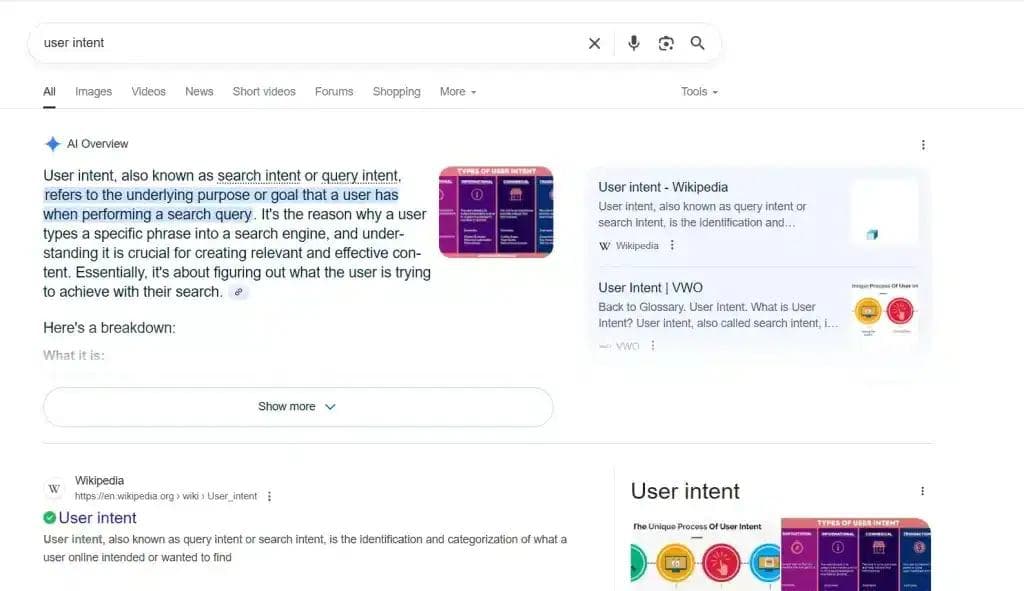
- Proper keyword targeting and search intent: Start with what people are actually searching for and match your content to what they expect to find, whether that's a quick answer, a comparison, or something they're ready to buy.
- Well-optimized service/product/category pages: These pages should make it clear what you offer, who it's for, and what makes you different. Keep it in plain language, no marketing fluff.
- Backlinks and general website authority: They still matter for traditional SEO. I wouldn't put them as a GEO-specific ranking factor, but having a site that other reputable websites reference is certainly useful.
Here’s one area that I think deserves more attention.
Building strong topical authority
Don't stop at one page targeting your main keyword. If you want search engines and AI systems to understand your business, cover the important questions and subtopics related to it.
Recently, I worked on a website with 0 backlinks and no previous SEO. By building topical clusters around its niche (high school plays for drama clubs), I was able to grow its organic traffic significantly within a year.
Some of the blog topics I covered were:
- best shakespeare plays
- best high school plays
- how to write a play
- how to write a play review
- stage directions
I also did something similar with the category pages, covering areas like:
- fantasy plays
- historical plays
- full-length plays
- science fiction plays

You can do something similar for your business. Let’s say your company sells solar panels and home battery systems. Just one page on "Best home solar panels" doesn't give you much depth. That's only one search your potential customers could make.
You could start by asking AI platforms questions and covering topics like:
- What are the best solar panels for a three-bedroom house?
- How much does it cost to install solar panels at home?
- How many solar panels do I need to power my house?
- Are home batteries worth buying with solar panels?
These pages should have a clear relationship with each other. Try to link them together where it makes sense. This gives you more opportunities to appear for related searches and gives AI systems more information about your expertise in a particular subject.

My recommendation: start with the topics closest to your products or services, then work outwards into the questions your customers ask before, during, and after making a purchase.
Does ranking well in Google actually help you get cited by AI?
There's a common assumption that if you rank #1 on Google, you'll automatically dominate AI answers too. That's not really true, and there's data to back it up.
Ahrefs analyzed 863,000 keyword search results and around 4 million AI Overview citations. Its results found that only about 38% of the pages cited in AI Overviews also ranked in the top 10 organic results for that same search. A year earlier, that number was closer to 76%.
Part of the reason is something Google calls query fan-out. With this, instead of just matching the exact words someone typed, the system generates a batch of related sub-questions in the background and pulls in whichever pages perform well across that whole group.
So ranking well for one specific keyword doesn't automatically mean you'll show up in the answer, because the answer might actually be built from five or six related searches you never directly targeted.
Imagine someone searching for “the best accounting software for a small business."

The system could look for more than that exact question. It could also consider things like pricing, invoicing features, integrations, ease of use, and the needs of different types of small businesses. What that means is that:
- A page might rank well for the original query but have very little useful information about those related questions.
- Another site might rank lower for the main query but have better coverage across the wider topic.
Semrush compared Google’s AI Mode to traditional search, Google's AI Overviews and other LLMs, including ChatGPT and Perplexity, using more than 150,000 citations and over 5,000 randomly selected keywords to see source citation patterns.
Perplexity used Google's rankings the most, with around 91% domain overlap. While ChatGPT used them the least, having the weakest overlap of all four at just 44.6%.

Good SEO puts you in a much stronger position for AI visibility. It just doesn't guarantee that ranking high for one keyword means you'll do better with AI-generated answers for that same topic. You need to cover the surrounding cluster of related questions too, which really is just topical authority by another name.
Remember that website with zero backlinks I mentioned earlier? Building topical authority didn’t just improve rankings and grow traffic; it also helped them get more impressions from Google’s AI Overview.

2. Optimize Your Own Website and Content for AI Visibility
Once the technical foundation is in place, there’s plenty you can do on your own website to increase the chances of your content appearing in AI-generated answers. Most of the job is making content easier to understand, use, and trust.
Some are straightforward fixes:
- Use clear headings and a logical structure: Your headings should describe what the section is actually about, in a sensible order, so both readers and AI systems can find the bit that answers a specific question.
- Answer important questions directly: If people regularly ask how much something costs or what the difference is between two products, answer those questions clearly instead of making readers dig through the page.
- Use lists, tables, comparisons, and FAQs when they make sense: Don't add them just because you've heard they're good for GEO. If a comparison is easier to understand in a table, use a table. If something is a process, a numbered list is probably better than several paragraphs of text.
- Cover the topic properly: Thin content that skims across a subject rarely gives you much to work with. If you're covering an important topic, answer the obvious follow-up questions too.
- Use statistics and link to reliable sources: If you're quoting a figure, say where it came from and link to the original source. This gives readers something they can check and gives AI systems a clear source to reference.
- Make your company, product, and author information obvious: If an AI system can't easily tell who published the content or who a product belongs to, it's harder for that content to be attributed to your brand.
- Add images, videos, and other useful multimedia: Images, videos, and other media can add information that plain text can't.
The bigger opportunities are usually found in the content itself. Google absolutely hates commodity content, and if you want to please the bots in 2026, you need to avoid that.
Creating quality, non-commodity content LLMs love
Remember these when creating new content or refreshing old pages.
Publish original information: Publishing original research data is one of the best ways to make your content different. If a SaaS company has product usage data that nobody else can access or if a service business has years of customer results or internal data, they’re more likely to get recommended.
Show real case studies and first-hand experience: Use your own screenshots, results, examples, and case studies where you have them. That's one reason I've included actual client examples throughout this guide. Plenty of websites can explain what GEO is, but only a few can actually show results from real clients.
Give people an expert opinion: If your article has the same takes as every other article on the internet, then there's nothing separating yours from the rest. You don't need to be controversial for the sake of it, but if you've tested something and reached a different conclusion, say so.
Keep important content up to date:Ahrefs analyzed roughly 17 million citations across seven AI platforms and found that AI assistants tended to cite newer content than traditional Google results, with cited pages being about 25.7% more recent on average. ChatGPT showed the most preference for newer sources in the study, while Google AI Overviews preferred newer content less.

You don't have to rewrite the article every few weeks just to make it look fresh. Update pages when the underlying information changes, especially where you're dealing with prices, statistics, products, regulations, or other information that can become outdated.
A good example of what this looks like
I think this is easier to understand with an example Google uses in its own guidance on AI search. Take a page titled "7 Tips for First-Time Homebuyers." There's nothing necessarily wrong with it, but the information is likely to be fairly generic. Hundreds of other websites can give readers essentially the same advice.
Now compare that with a page based on a specific experience, such as "Why We Waived the Inspection and Saved Money: A Look Inside the Sewer Line." The second title signals a first-hand experience nobody else has.
So the idea here isn’t just to write better titles. It’s to look at what you or your customers experience and build content around that. If the only thing you can say about a topic is what's already available in your industry, you're probably not adding much.
Which content formats work well for GEO?
You don’t need a special content format to show up on AI search. Standard SEO works just alright. However, my favorites are listicles on external websites or self-published, comparison articles, and informational content.A few other content formats that work well for AI visibility include:
- Detailed guides
- Original research
- Case studies
- "Best X" roundups
- Product and service pages
- Reviews, pricing, and features pages
- FAQs.
“Best Alternatives” pages work particularly well for GEO because they line up naturally with the questions people ask when they're switching products or services. Someone might ask an AI assistant, "What's a good alternative to [competitor]?"
Pricing and features pages also work well. A lot of commercial searches eventually come down to how much things cost and whether they actually do what the person needs.
Citation, Mention, and Recommendation: What are the differences
For me, these are very different things.
- Being cited means the AI system links to your page as a source.
- Being mentioned means your brand appears in the answer.
- Being recommended means the AI actively suggests your brand or product as the answer to what someone's looking for.
You'd assume the first usually leads to the other two, but that doesn’t always happen.
Research from Semrush and SEO researcher Kevin Indig looked at nearly 4,000 domain appearances across 115 prompts, 14 countries, and four major AI platforms (ChatGPT, Google AI Overviews, Gemini, and Google AI Mode). They found that around 60% of the time a brand's page was cited as a source, the brand's actual name never appeared in the answer at all. Indig calls this a "ghost citation." Only around 13% of the appearances in the study included both a citation and a named mention.

What this means is getting your article used as a source is a good start, but it's not the same as building brand recognition through AI search. If your goal is to have people discover and/or get AI assistants to recommend your company, you need to look beyond citation counts.
GEO myths and things I wouldn't spend time or money on
I’ll try to be very direct here because there’s a lot of noise around GEO right now, and I don't want you burning your budget on any of it. There are plenty of very technical-sounding online tactics that don't necessarily have much behind them.
- You don't need an llms.txt file or any other "special" AI markup. Google has said its search systems don't use these files at all.
- You don't need to break every article into tiny "AI-friendly" chunks for AI to understand it. Google's systems can identify the relevant passages from normally structured pages.
- You don't need to write your content in some special robotic writing style just for AI. These systems can understand context, synonyms, and general meaning just fine, the same way a human reader would.
- Don't manufacture mentions just for the sake of getting mentioned. Paying for meaningless brand placements or filling the web with low-quality mentions isn't the same thing as getting coverage. If the sites and content have no real value, it can actually work against you if it looks like manipulation.
- You don't need to over-invest in exotic schema markup. Structured data is still worth doing where it makes sense, especially as a part of general SEO practice. But I wouldn't spend GEO budget trying to find some obscure schema type that supposedly makes ChatGPT recommend you.
I'd add one more from my own experience: you probably don't need a GEO course to figure this out.
There's useful information out there, and the field is still developing, but a lot of what gets packaged as revolutionary GEO strategy comes back to things SEO and content marketers have been doing for years. Learn the fundamentals, like the ones in this article and apply them. You'll be ahead of most of what's currently being marketed as cutting-edge.
3. External Mentions, Listicles, and Third-Party Websites
I personally think this is the most important part of GEO, and it gets the least attention. It’s the one I’d prioritize most if I were just getting started on a limited budget.
Remember how I got mentioned as one of the “best SEO consultants 2026”? I didn’t create that article on my site. Rather, it was published on The Silicon Review, which got cited by ChatGPT for that search.
Think about what happens when someone asks ChatGPT, "What are the best SEO agencies for startups?" AI doesn’t generate its answer from information on the websites of those agencies alone. The system can pull information from other sources like review sites, comparison articles, directories, Reddit threads, YouTube videos, and industry publications. These sources are then filtered and summarized.
That means you can have an excellent page about startup SEO on your own website and still be less visible than a competitor who simply shows up more often across those external sources. So as a brand, I wouldn’t focus on just trying to optimize my page. I'd also try to find out which external sources are influencing the AI answers I want to appear in and then figure out how to get included in them.
Here's the workflow I typically use with clients:
- Search the important, high-intent prompts your customers would realistically search for on ChatGPT, Google AI Mode, and Perplexity.
- Record the websites that keep showing up as sources.
- Look at which competitors are being mentioned or linked from those external sites.
- Find the sites where your competitors appear and you don't.
- Work out a realistic way to get included. That might mean outreach, making a submission, contributing an article, paying for a placement or creating something the publication can link to.
That's really the process. There's no complicated technical setup. The difficult part is doing the research properly and then consistently working through the opportunities you find.
For instance, if you search for "best project management software for remote teams" on ChatGPT or other AI platforms, you'll see certain review sites and comparison articles cited as sources, along with a handful of YouTube reviews.

If I were working with a company that offers a project management tool that isn't showing up in those answers, my next move is to check whether they're actually listed and reviewed on those specific sites, and if not, get them added.
I've done this myself. A great example is a SaaS company I worked with in April 2026. I didn't touch their on-site SEO at all. Instead, we published 10 articles about the company on relevant external websites. Within 2 weeks, we started seeing an increase in traffic coming from AI platforms.

Don't overlook Reddit
When ChatGPT answers a question, it's pulling from a fairly small set of trusted sources, and Reddit is currently the biggest one. It comes up constantly in AI citations, yet most businesses have no strategy for it at all. In February 2024, Google signed a licensing deal with Reddit worth around $60 million a year, giving Google structured, real-time access to Reddit's content for training and surfacing in its products.
This doesn't mean every Reddit thread about your industry will automatically end up in ChatGPT or Google's AI results. What it does mean is Reddit is a major source of information for the search and AI ecosystems.
Ahrefs tracks every domain ChatGPT cites across a broad set of US queries, then ranks them by mention share, which is a domain's citations as a percentage of all citations among the top sources. And according to Ahrefs' Brand Radar data, as of September 2026, reddit.com leads with 16.8% as the most cited website, ahead of Wikipedia and every publisher on the list.


Mentions still count even without a link
You also need to understand that a mention doesn't even need a link to help your AI visibility. Ahrefs looked at 75,000 brands and found that branded mentions - just your name showing up in an article, a video description, wherever - correlate more with AI visibility than backlinks or domain rating, just behind YouTube mentions.

It’s fairly easy to overlook YouTube because most SEO campaigns are still heavily focused on written content. YouTube mentions, which cover everything from your brand popping up in video titles to descriptions and transcripts, correlated strongly with AI visibility across ChatGPT, Google AI Mode and AI Overviews.
This shouldn’t be much of a surprise since Google owns YouTube, and Google also owns AI Mode and AI Overviews, both of which use YouTube as their most-cited source. But this isn’t just limited to Google’s products. The correlation held up on ChatGPT too.

A review from an established YouTube channel, for example, can create another source of information about your brand outside your own website. You don't control what the creator says, obviously, but you can make it easier for relevant creators to discover your product, offer useful information for reviews and build relationships with people who already have an audience in your market.
Other third-party sources
Reddit and YouTube aren't the only places that matter. Depending on your industry, I'd also look at:
- Best-of and "top X" listicles covering your category
- Comparison articles, including "X vs Y" and "X alternatives" pages
- Review platforms like G2, Clutch, Capterra, and Trustpilot
- Industry-specific directories
- Relevant forums and communities
- Digital PR and industry publications
- Guest contributions and expert commentary
- Original research and statistics that other publications can reference
A lot of this can be done manually. You can go on Google and type in phrases like "best [your service]," "best [software category]," "[your competitor] alternatives," and "[product A] vs [product B]," then see who's ranking and who's missing. You can also search directly inside ChatGPT and Perplexity to find which sources they use.
Here are some tools I’d suggest to speed this up.
One thing I want to be clear about: The goal is finding a specific handful of sites or platforms that actually influence how AI systems talk about your market and getting relevant presence there. 10 well-placed, relevant mentions will do more for your AI visibility than a hundred generic mentions bought purely for domain rating.
How to Measure GEO Metrics
Generative engine optimization doesn’t use rank tracking for measuring performance like traditional SEO does. As we’ve seen in the first pillar, your brand can rank well for specific keywords and still not get cited or recommended in AI search answers.
With AI search, the answer to a question varies with prompts and platforms. Those answers could also change and return a different set of sources a few days later without anything changing on your end. Platforms like AI Overviews can change their sourcing every couple of days without necessarily changing their conclusion.
What I'd look at instead is visibility across a consistent set of prompts. How often does your brand appear? Is the name mentioned? Is your website being cited? Are you actually being recommended? And how does that change over time?
These are the metrics I'd actually track:
- A fixed set of prompts: Make a list of prompts your customers are likely to ask and check them consistently.
- Brand mentions: How often does your company name get mentioned in the answer?
- Citations: How often is your website used as a source?
- Recommendations: Is the AI actually suggesting your company or product, or is it simply referencing you as one of the sources?
- Competitor visibility: Which competitors show up alongside you, and which ones are appearing where you aren't?
- Source visibility: Which third-party websites are repeatedly being cited for your target prompts?
- Topic visibility: What topics are you showing up for, and where are competitors consistently beating you?
- Accuracy: How accurately the AI describes your company. Occasionally you'll find outdated or incorrect information.
- Referral traffic and conversions: Whether AI platforms are actually sending you referral traffic and whether that traffic converts once it lands.
What tools should you use?
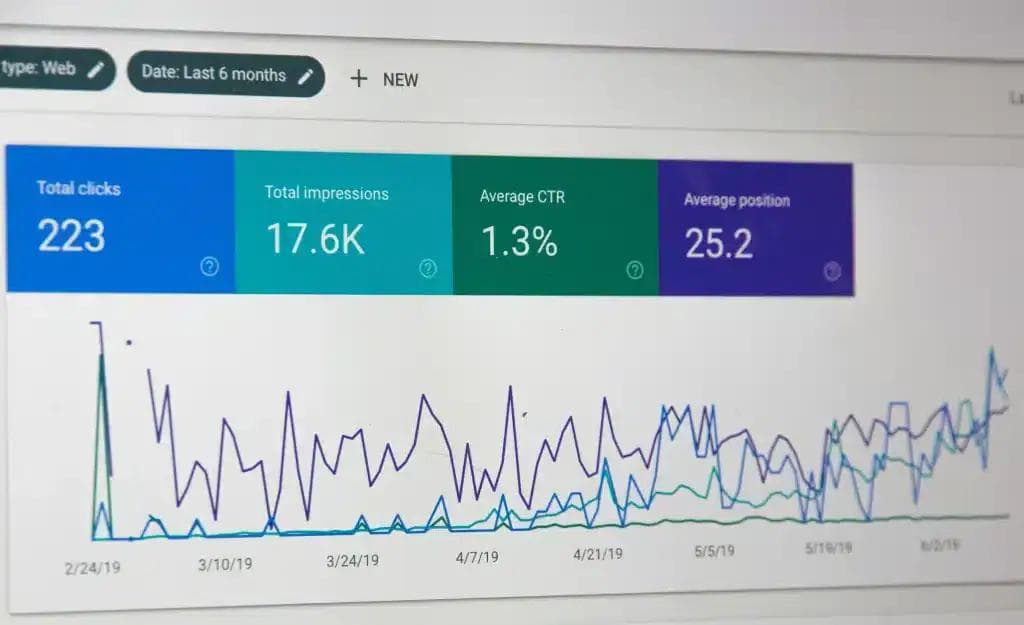
There are a bunch of tools you can use to get a better look at your GEO performance. For dedicated tracking, I'd look at tools like Ahrefs' Brand Radar and Semrush's AI visibility features. Both are built to give you visibility into brand mentions and citations across major AI platforms. Google Search Console is also useful for monitoring impressions. It can help you understand how your existing pages are performing on Google’s AI Overview.
Simplify the Process With Tips From a GEO Expert
With the right strategy, Generative Engine Optimization can help you get your business in front of people who are now using AI to search for products, services, and companies. But you don't need to reinvent your entire SEO strategy to get into those AI answers. In most cases, the same things that make a website useful and trustworthy in search also give AI systems better information to work with.
Start with the basics. Make sure your technical SEO is solid, create content that answers the questions your audience is asking, and cover your subject in-depth.
Look beyond your own site to external websites and platforms. Find the publications, review sites, communities, and other sources that are already influencing AI-generated answers in your industry.
The balance between those areas will depend on your business. If your website has technical problems or weak content, that's where I'd start. If the site is already strong but you can’t get your brand to show up in AI answers, I'd put more effort into external mentions and third-party coverage. I've used this approach with clients across different industries.
If you're not sure where your business currently stands or if you'd rather have a GEO expert handle the process for you, I can help. I'll assess your current AI visibility, look at where your competitors are appearing, identify the sources influencing your market and recommend where I'd focus your efforts first.
Book a free consultation today to find out where your brand currently stands and how GEO can support your wider SEO strategy.